
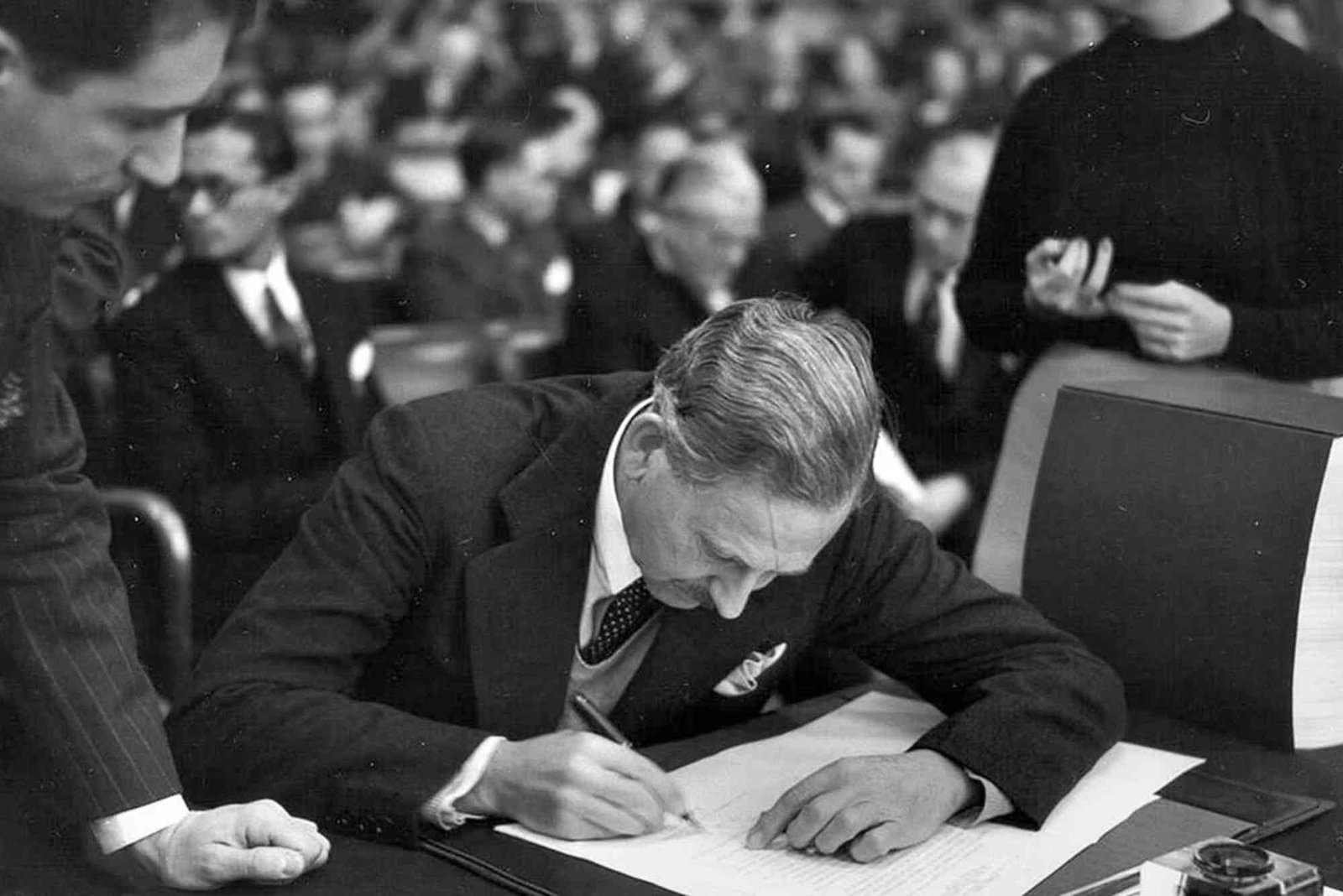
General Agreement On Tariffs And Trade 1947: Understanding Its Global Impact
The General Agreement On Tariffs And Trade 1947 (GATT 1947) laid the foundation for modern global trade. Established after World War II, it aimed to reduce trade barriers and promote international economic cooperation. Over the decades, GATT influenced trade policies and led to the creation of the World Trade Organization (WTO) in 1995. Understanding GATT 1947 is essential for businesses, policymakers, and students of international economics.
What Is the General Agreement On Tariffs And Trade 1947?
The General Agreement On Tariffs And Trade 1947 is a multilateral treaty designed to promote free and fair trade among nations. It aimed to reduce tariffs, eliminate quotas, and ensure non-discriminatory trade practices. The agreement marked a shift toward cooperative global economic policies and helped prevent trade conflicts.
Key Objectives of GATT 1947
-
Reduce Trade Barriers: GATT encouraged nations to lower tariffs and import duties to facilitate smoother trade.
-
Ensure Non-Discrimination: The Most-Favored-Nation principle ensured that no member country faced discriminatory treatment.
-
Promote Economic Recovery: After World War II, GATT supported global economic recovery by fostering trade and investment.
-
Prevent Trade Conflicts: By providing a legal framework for resolving disputes, GATT reduced the likelihood of trade wars.

Principles Underlying GATT 1947
-
Transparency: Countries were required to publish trade regulations and policies.
-
Reciprocity: Trade benefits were granted based on mutual concessions.
-
Fair Competition: GATT promoted fair competition by preventing trade-distorting practices.
Historical Background of GATT 1947
After World War II, global economies were struggling to recover. Nations recognized the need for an international framework to regulate trade. Initial efforts under the International Trade Organization failed, leading to the creation of GATT 1947. This agreement became the cornerstone of international trade until the WTO took over in 1995.
The Role of GATT in Post-War Economic Recovery
GATT played a critical role in revitalizing trade in Europe and North America. By reducing tariffs, it allowed countries to access foreign markets more easily. It also encouraged industrial growth and strengthened diplomatic relationships through trade cooperation.
Major Trade Negotiations Under GATT 1947
Several negotiation rounds occurred under GATT, each contributing to trade liberalization:
-
Geneva Round (1947): The founding round that established the initial framework.
-
Dillon Round (1960–1962): Focused on tariff reductions and trade expansion.
-
Kennedy Round (1964–1967): Addressed tariff cuts and anti-dumping measures.
-
Tokyo Round (1973–1979): Expanded into non-tariff barriers and trade regulations.
Impact of GATT 1947 on Global Trade
The agreement significantly influenced international trade practices and policies. Learn more Its impact is still seen today in modern trade agreements.
Economic Benefits of GATT 1947
-
Increased Trade Volumes: Lower tariffs enabled countries to export and import goods more freely.
-
Market Access: Nations gained better access to global markets.
-
Investment Growth: Stability in trade policies encouraged foreign investments.
-
Global Cooperation: GATT fostered collaboration between developed and developing countries.
Limitations of GATT 1947
While GATT provided a foundation for free trade, it had some limitations:
-
It lacked a formal institutional structure.
-
It primarily focused on goods, not services.
-
Dispute resolution mechanisms were weak compared to today’s WTO system.
Transition from GATT to the World Trade Organization
GATT eventually evolved into the World Trade Organization (WTO) in 1995. The WTO expanded on GATT principles, covering services, intellectual property, and stricter dispute settlement mechanisms. This transition ensured a more robust framework for regulating global trade.
Why the Transition Was Necessary
-
Complex Trade Needs: Global trade grew more complex with services and digital goods.
-
Stronger Enforcement: WTO provided enforceable rules, unlike GATT.
-
Comprehensive Coverage: WTO agreements included agriculture, services, and intellectual property rights.
Modern Relevance of GATT 1947
Even after the formation of the WTO, GATT 1947 remains relevant. Its principles continue to guide international trade policies. Related Blog article Many trade agreements still reference the GATT framework, reflecting its enduring influence.
Lessons from GATT 1947 for Businesses
Businesses can benefit by understanding GATT principles:
-
Leverage free trade policies to enter new markets.
-
Monitor tariff reductions to optimize supply chains.
-
Comply with non-discriminatory trade practices.
Policy Implications
Governments can use GATT’s framework to negotiate fair trade agreements, protect domestic industries, and promote economic growth.
FAQ: General Agreement On Tariffs And Trade 1947
What countries were part of the original GATT 1947?
The original GATT 1947 included 23 countries, primarily from Europe, North America, and Oceania.
How does GATT differ from the WTO?
GATT focused mainly on goods and voluntary dispute resolutions, while the WTO covers goods, services, intellectual property, and provides enforceable rules.
Why was GATT 1947 important for post-war recovery?
GATT helped rebuild global economies by reducing trade barriers, fostering international cooperation, and encouraging investment.
Is GATT 1947 still in effect today?
Technically, GATT 1947’s principles continue under the WTO, but the organization itself no longer exists as a separate entity.
How did GATT affect developing countries?
GATT provided developing countries access to larger markets, promoted industrial growth, and encouraged fair trade practices.
The General Agreement On Tariffs And Trade 1947 revolutionized international trade and set the stage for today’s global economy. Its focus on reducing tariffs, promoting fair competition, and fostering cooperation created a stable framework for economic growth. Understanding GATT’s principles helps businesses, policymakers, and students navigate the complexities of international trade.
For more insights into trade policies and global economics, explore our Related Blog article and Learn more about historical trade agreements.